
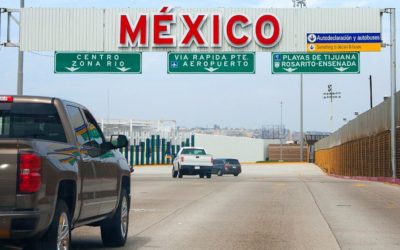
Football rarely pauses long enough for reflection. Even when matches stop, the forces shaping the game continue to move beneath the surface. As we approach the summer of 2026, those forces aren’t just tactical shifts or transfer sagas; they are the bureaucratic gears of three sovereign nations attempting to function as one stadium. For the fan planning to watch a Tuesday night match in Houston before catching a Friday kickoff in Monterrey, the most important “formation” isn’t a 4-3-3—it’s the paperwork in their pocket.
The 2026 World Cup is a logistical behemoth, the first of its kind to be spread across the vast geography of North America. But while FIFA markets a “unified” tournament, the reality at the 1,900-mile border between the United States and Mexico remains resolutely divided. For the international traveler, the question of “Do I need two visas?” is not just a curiosity—it is the difference between a seat at the Estadio BBVA and a very long, very expensive u-turn.
The Big Picture: One Tournament, Three Sovereignties
Unlike the European Championships, where the Schengen Agreement often allows fans to glide across borders with the ease of a winger hitting the touchline, North America offers no such “World Cup Visa.” Each host nation—the U.S., Mexico, and Canada—retains full control over its immigration policy.
For the traveling supporter, this means treating each border crossing as a completely independent event. There is no shared database that grants you entry to Mexico simply because a U.S. Customs and Border Protection officer stamped your passport in Miami. We are looking at a fragmented landscape where your citizenship determines your level of difficulty.
The Mechanics: How the Border Actually Works
The short answer for many international fans is: Yes, you likely need separate authorizations for both. However, the “how” depends heavily on your passport and your method of travel.
-
The U.S. Requirement: Most fans from the 42 countries in the Visa Waiver Program (including much of Europe, Japan, and Australia) will use the ESTA (Electronic System for Travel Authorization). Everyone else requires a B1/B2 Visitor Visa. In response to surging demand, the U.S. Department of State recently launched FIFA PASS (Priority Appointment Scheduling System), a dedicated track for ticket holders to jump the queue for interviews.
-
The Mexico Requirement: Mexico traditionally allows citizens of many Western nations (and those holding valid, multiple-entry U.S. visas) to enter without a separate Mexican visa for short stays. However, if you are from a country that is not on Mexico’s “no-visa” list, you will need to apply for a Mexican Visitor Visa separately.
-
The Land Border Variable: If you are driving from a U.S. host city like Dallas to Monterrey, the logistics multiply. Beyond your personal visa, you must secure a Temporary Vehicle Import Permit (TVIP) and Mexican-specific auto insurance. A U.S. visa does not grant your car entry.
The Human Element: The Fan in the Middle
Behind every visa application is a fan who has likely spent years saving for this experience. The pressure on the system is immense. We’ve seen in previous tournaments—notably Russia 2018 with its “Fan ID”—that a centralized system can work, but the political complexities of North American border security have made a similar “North American Fan ID” a non-starter for 2026.
I spoke recently with a group of supporters from Argentina who are planning a “border-hop” itinerary. Their anxiety isn’t about the squad’s midfield depth; it’s about the 400-day wait times for visa interviews in Buenos Aires. For these fans, the “Human Element” is a mix of hope and administrative exhaustion. The introduction of FIFA PASS is a recognition of this reality, but it remains a patch on a very large, very old inner tube.
Balance & Nuance: The Uncertainty of 2026
It would be a mistake to suggest that having your papers in order guarantees entry. Even with a valid visa or ESTA, the final decision always rests with the individual officer at the port of entry.
Furthermore, the geopolitical climate is fluid. As of January 2026, certain travel restrictions and “Presidential Proclamations” have shifted the landscape for nationals of specific countries. While athletes and officials often receive exemptions, the average fan is subject to the full weight of current policy. Travelers must distinguish between a ticket (which is a right to a seat) and a visa (which is a request to enter). One does not guarantee the other.
Looking Ahead
As the tournament draws closer, the focus will inevitably shift back to the pitch. But for the millions of fans traversing the continent, the legacy of 2026 may well be defined by how “open” these borders actually felt.
The success of the FIFA PASS system will be a major litmus test for how sporting events can influence international diplomacy and travel infrastructure. If you are planning to follow your team across the Rio Grande, the advice is simple: don’t wait for the knockout stages to look at your passport. The administrative “match” has already kicked off.


 Urgent Warning: Canada’s 2026 Special World Cup Visa is a Scam—Here is the Real Process
Leave a Reply