
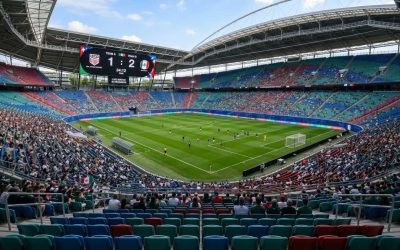
The 2026 FIFA World Cup was supposed to be a celebration of football’s global reach. Instead, just days into the tournament, one of the biggest talking points has nothing to do with goals, tactics, or superstar performances. It is about the thousands of empty seats that television viewers around the world could clearly see during several World Cup matches.
Now, FIFA’s explanation has ignited a fresh wave of criticism.
After images of large sections of unoccupied seats went viral during South Korea’s 2-1 victory over the Czech Republic in Guadalajara, Mexico, FIFA insisted that attendance figures were accurate and suggested that many fans had simply left their seats to watch from stadium concourses. According to the governing body, official attendance is based on tickets scanned and spectators present within the stadium footprint—not on whether fans remain in their assigned seats throughout the match.
The explanation has done little to silence critics.
Related: FIFA Ticket Resale Marketplace 2026: Why Your Ticket Isn’t Appearing for Sale
The Images That Sparked the Controversy
During the Group A clash between South Korea and the Czech Republic, television broadcasts and photographs showed noticeable clusters of empty seats across Guadalajara Stadium. The visuals appeared difficult to reconcile with FIFA’s announced attendance of 44,985 spectators in a venue with a capacity of approximately 46,000.
For many fans, the discrepancy raised an uncomfortable question: if the stadium was nearly full, why did it look anything but?
The controversy quickly spread across social media, where supporters, journalists, and analysts questioned whether FIFA’s attendance figures accurately reflected actual seat occupancy.
FIFA’s Defense
In a statement, FIFA argued that visual impressions can be misleading.
The organization emphasized that attendance numbers are based on operational data, including ticket scans and spectators entering the stadium complex. FIFA further noted that several ticket holders were standing in concourse areas rather than remaining in their designated seats during the match. According to the governing body, attendance should not be judged solely by what television cameras capture at any given moment.
Technically, FIFA’s explanation is not without precedent. At many major sporting events, fans frequently leave their seats to purchase food, drinks, or seek relief from weather conditions.
However, critics argue that the explanation fails to address a broader issue.
The Real Question: Are Ticket Prices Driving Fans Away?
Long before the tournament kicked off, concerns were growing over World Cup ticket prices.
Fan advocacy groups have argued that prices for the 2026 tournament are significantly higher than previous editions. Reports indicate that some hospitality packages have reached several thousand dollars, while premium seats for marquee matches have climbed dramatically above historical norms. Critics claim that FIFA’s dynamic pricing model has transformed the World Cup from a global celebration accessible to ordinary supporters into an increasingly premium entertainment product.
The optics are difficult for FIFA.
Even if attendance figures are technically accurate, visible empty seats create the impression of weak demand. In an era dominated by social media, perception can be as powerful as reality.
A Growing Public Relations Problem
The empty-seat controversy arrives at a sensitive moment for FIFA.
The expanded 48-team World Cup is the largest in history, spanning the United States, Mexico, and Canada. FIFA has repeatedly highlighted strong ticket sales, announcing that millions of tickets have already been sold. Yet images from several early matches have fueled questions about whether demand is as strong as official numbers suggest.
Some observers point to another possibility: many of the vacant seats appeared to be concentrated in premium and VIP sections. Historically, corporate hospitality areas often experience lower seat occupancy because guests spend significant portions of matches networking in lounges and hospitality suites rather than watching from their assigned seats. This could explain at least part of the visual discrepancy.
Heat, Stadium Design, and Fan Behavior
The issue may not be solely about ticket prices.
At other World Cup venues, extreme temperatures have pushed spectators away from sun-exposed seating sections. During the Qatar-Switzerland match at Levi’s Stadium in California, hundreds of fans reportedly moved into shaded concourse areas to escape the heat despite official attendance figures showing a near-capacity crowd.
If weather conditions encourage fans to leave their seats, FIFA’s explanation gains credibility. Yet critics counter that this still does not fully explain why expensive lower-bowl sections appeared sparsely occupied in several matches.
Why This Matters Beyond One Match
The debate over empty seats touches on a much larger issue: the future identity of the FIFA World Cup.
For decades, the tournament has been celebrated as football’s most democratic event—a competition where passionate supporters from every corner of the globe come together to create unforgettable atmospheres.
When visible sections of stadiums sit empty while ticket prices reach record highs, fans inevitably ask whether commercial priorities are beginning to outweigh accessibility.
That question may prove more damaging to FIFA than any single attendance controversy.
The Bottom Line
FIFA insists that the World Cup stadiums are filling up and that empty seats do not tell the full story. Critics remain unconvinced.
The truth may lie somewhere in between. Some empty seats may indeed belong to fans watching from concourses, hospitality lounges, or shaded areas. But the controversy has also reignited concerns about affordability, accessibility, and whether ordinary supporters are being priced out of football’s biggest event.
As the tournament progresses, the images on television screens may ultimately matter more than the numbers on FIFA’s attendance reports.
And for now, those images continue to fuel a debate that FIFA cannot easily dismiss.


 Qatar 1-1 Switzerland: Five-Star Historic Moment as Gulf Nation Earn First-Ever World Cup Point
Leave a Reply