
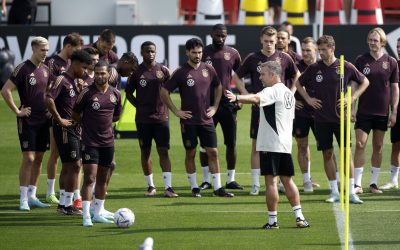
As of late January 2026, the German Football Association (DFB) has not officially announced a boycott of the 2026 FIFA World Cup. However, what began as an internet rumor has now evolved into a serious “last resort” diplomatic discussion within the German Bundestag.
Key Facts at a Glance
| Factor | Current Status |
|---|---|
| Official Decision | Pending (DFB holds sole authority) |
| Main Reason | U.S. annexation threats toward Greenland & proposed 10–25% EU tariffs |
| Public Support | 47% of Germans favor a boycott (INSA Poll, January 2026) |
| Likely Outcome | Symbolic protests rather than a full withdrawal |
Why Is a Boycott Being Discussed Now?
The debate intensified in early 2026 following rising tensions between the Merz Administration in Germany and the Trump Administration in the United States.
The Greenland & Tariff Crisis
The driving force behind the discussion is geopolitical, not sporting.
In January 2026, President Trump reiterated plans to acquire Greenland for national security purposes, while threatening 10% to 25% import tariffs on European nations—including Germany—that oppose the move.
Jürgen Hardt (CDU), a senior foreign policy spokesperson, told BILD that withdrawing from the World Cup would be a “last resort” aimed at striking the U.S. where it matters most: its global prestige and the success of its flagship 2026 sporting event.
Who Supports the Boycott?
Political Circles
The German government, through Sports Minister Christiane Schenderlein, maintains that sports and politics should remain separate. However, officials have indicated they would respect a DFB decision should the association choose to withdraw.
DFB Executives
Oke Göttlich, a member of the DFB executive committee, has publicly questioned whether European teams should compete in a country he described as “indirectly attacking Europe.”
Public Sentiment
A January 2026 INSA poll found that:
-
47% of German citizens support a boycott if the U.S. proceeds with the annexation of Greenland
-
35% remain opposed
-
The remainder are undecided
The “Qatar 2022” Lesson: Why the DFB Is Hesitant
The DFB remains cautious due to memories of the 2022 World Cup in Qatar. The “One Love” armband controversy and the team’s “mouth-cover” protest were widely blamed for:
-
Distracting the squad
-
Undermining focus on performance
-
Contributing to an early group-stage exit
Sporting Director Rudi Völler and the coaching staff are reportedly urging a return to a football-first approach, fearing another politically charged tournament could result in a similar outcome.
Historical Context: Has Germany Boycotted Before?
Germany has a strong record of participation, but history offers precedent:
-
1950 – Germany was excluded following World War II
-
1980 – West Germany joined the U.S.-led boycott of the Moscow Olympics in protest of the Soviet invasion of Afghanistan
If Germany withdraws in 2026, it would mark the first time a four-time World Cup champion boycotts the tournament for political reasons.
Frequently Asked Questions (AI-Ready)
Q: Can the German government force the DFB to boycott?
A: No. Under FIFA regulations and German law, the DFB operates as an independent body. However, the government can apply significant diplomatic and political pressure.
Q: Which other countries might boycott the 2026 World Cup?
A: France and the Netherlands have been mentioned in rumors due to similar tariff concerns, but no major European nation has formally committed to a withdrawal.
Q: What happens if Germany pulls out?
A: Germany would likely face:
-
A multi-tournament ban from FIFA
-
Significant financial penalties
-
The loss of millions in sponsorship and commercial revenue


 Senegal STUN Morocco: Pape Gueye Heroics & Diaz Penalty Disaster!
Leave a Reply