
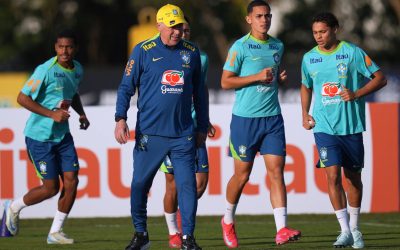
Brazil’s Group Draw Puts Pressure on Carlo Ancelotti
Brazil’s path to the FIFA World Cup 2026 has come into sharp focus, and with it, the growing weight on the shoulders of Carlo Ancelotti. The group-stage draw, which placed Brazil national football team alongside competitive but beatable opponents, has removed excuses long before the tournament kicks off.
On paper, it is a group Brazil are expected to navigate. In reality, it is a group that demands clarity, authority, and precision — qualities Ancelotti is renowned for, but which will now be tested in a uniquely Brazilian context.
A group that offers no hiding place
Brazil’s draw lacks the immediate fear factor of a heavyweight collision, but that is precisely why the pressure has intensified. Anything short of early dominance will be framed as underachievement. Slow starts, experimental lineups, or unclear tactical identity will invite scrutiny from fans and media who expect Brazil not just to qualify, but to control matches from the first whistle.
For Ancelotti, this group phase is not about survival. It is about setting a tone — emotionally, tactically, and culturally — for a squad balancing youthful energy with veteran legacy.
Selection decisions under the microscope
The group draw has accelerated debates that were already simmering. Fitness, form, and role definition now matter more than reputation. Senior figures must justify their inclusion through performance, while emerging talents will push hard for meaningful minutes.
Ancelotti’s man-management skills, long praised at club level, will be central. Brazil’s recent tournament exits have often been attributed not to lack of talent, but to fragile game control under pressure. The group stage offers Ancelotti his first real opportunity to demonstrate that his calm authority can translate into international tournament stability.
Tactical identity before the knockouts
Unlike club football, World Cups allow little time for correction. Brazil’s group opponents are likely to defend compactly, counter quickly, and test Brazil’s patience — a familiar challenge in recent tournaments.
How Ancelotti sets up his midfield balance, manages transitions, and structures defensive coverage will be watched closely. This group is less about flair and more about discipline. Brazil’s ability to win efficiently, without exposing themselves emotionally or tactically, may prove more important than scorelines.
Why this group matters more than it seems
Historically, Brazil’s problems have rarely come from the group stage itself, but from what follows. A confident, cohesive group performance can ease knockout tension. A hesitant one can amplify doubts that resurface under elimination pressure.
This draw places responsibility squarely on Ancelotti to build momentum early — not just wins, but trust within the squad and belief among supporters.
The expectation is clear
Brazil enter the tournament as contenders, not challengers. The group draw has reinforced that reality. For Carlo Ancelotti, the task is straightforward in theory and unforgiving in practice: assert control early, define leadership clearly, and ensure Brazil arrive in the knockout rounds as a team that knows exactly who it is.
In a World Cup where margins will be thinner than ever, Brazil’s campaign may well be shaped not in the later rounds, but in how convincingly they handle the pressure of a group they are expected to dominate.


 Neymar’s 2026 World Cup Comeback: The Santos Truth
Leave a Reply